
One of my fondest childhood memories is the afternoon my grandmother and I spent in her sunlit kitchen, the air filled with the sweet scent of almonds. I remember her carefully folding the delicate cake batter, her hands moving with the kind of grace that only comes from years of practice. As I watched, mesmerized, she shared stories of her own grandmother, who had perfected the art of baking this Almond Cream Cake. Every bite of that cake was a revelation—a soft, buttery crumb that melted in your mouth, layered with a luscious almond cream that was both rich and light. It was a moment of pure magic, one that I’ve carried with me ever since.
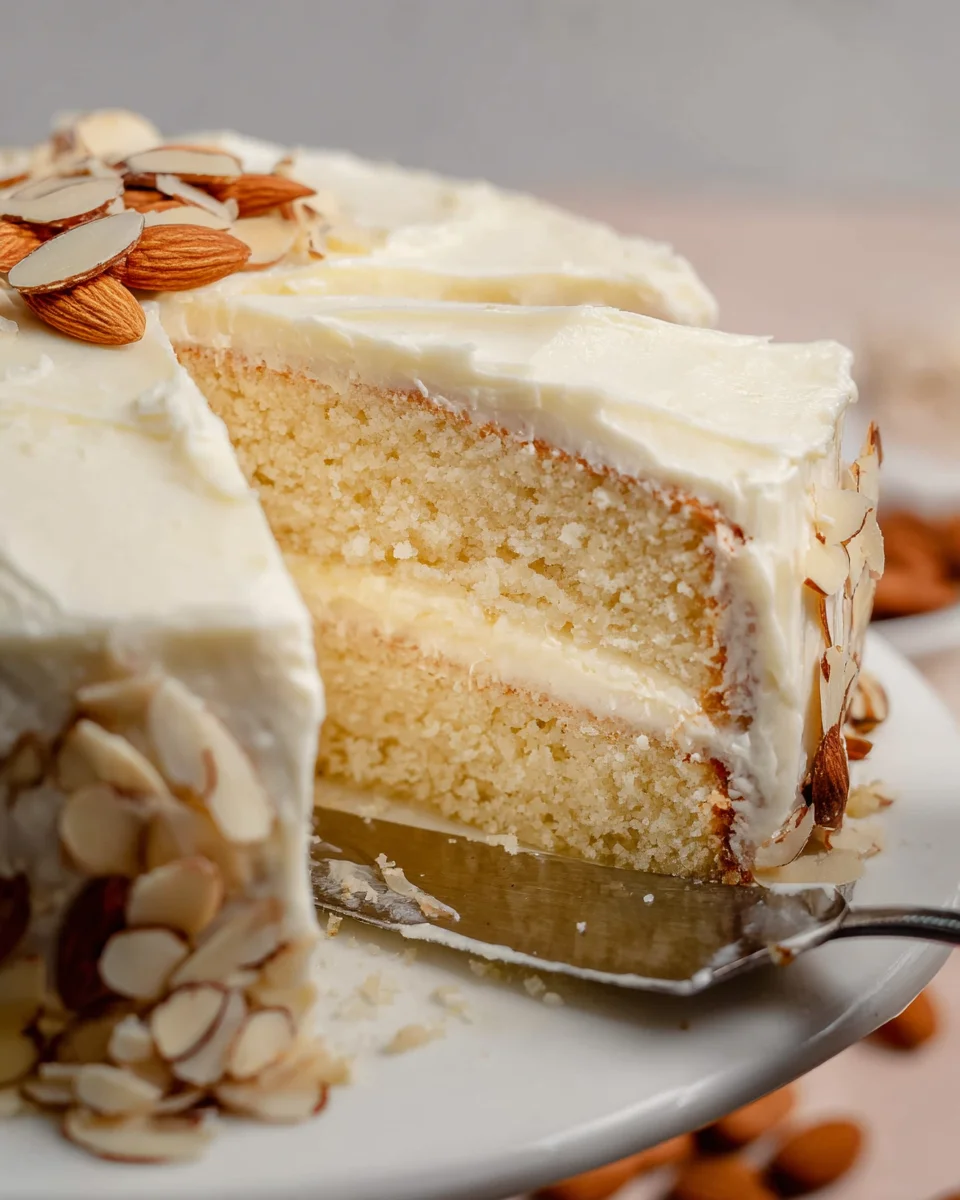
This Almond Cream Cake is more than just a dessert; it’s a celebration of family traditions and the love we pour into our cooking. With its golden, slightly crisp exterior and the creamy almond filling that oozes out with every slice, this cake is a feast for the senses. The aroma of toasted almonds wafts through the air, inviting everyone to gather around the table. It’s a showstopper at any gathering, but what makes my version special is the addition of a hint of vanilla and a touch of lemon zest, which brightens the flavors and adds a delightful twist.
Let me show you exactly how to make this delightful Almond Cream Cake, so you can create your own beautiful memories around the table.
Why You’ll Love This Recipe
- Light and moist texture that melts in your mouth, thanks to the whipped egg whites and creamy frosting.
- Unique homemade frosting made from cooked milk and flour, providing a velvety finish that isn’t overly sweet.
- Perfect for any occasion, this cake is not only impressive but also surprisingly easy to make, taking less than 2 hours from start to finish.
- Budget-friendly ingredients come together to create a gourmet dessert that serves up to 15 people, making it ideal for gatherings.
- Versatile flavor profile with almond extract that can be paired with seasonal fruits or enjoyed on its own.
Ingredients
- 3/4 cup egg whites (plus 3 tablespoons, 6-7 large egg whites*)
- 1 cup salted butter (room temperature)
- 1 1/2 cups granulated sugar
- 3 cups cake flour* (spooned and measured carefully)
- 1/2 teaspoon salt
- 2 teaspoons baking powder
- 1 cup 2% milk
- 1 teaspoon almond extract
- 1/2 cup plus 2 tablespoons all-purpose flour
- 2 cups 2% milk
- 1 1/2 teaspoons almond extract
- 2 cups granulated sugar
- 2 cups salted butter (room temperature)
- Sliced almonds and whole almonds for decorating
Let’s talk about some key ingredients that make this Almond Cream Cake sing! The egg whites are crucial for achieving that light and airy texture. When whipped correctly to stiff peaks, they create a lift that results in a fluffy cake. For the best results, use large, fresh eggs—older eggs may not whip as well. If you’re short on eggs, aquafaba (the liquid from a can of chickpeas) can be a great vegan substitute.
Next, the almond extract is essential for flavor. It infuses the cake with a nutty sweetness that pairs beautifully with the creamy frosting. Opt for pure almond extract instead of imitation for a more robust taste. If you’re looking for a different flavor profile, try using vanilla extract or even hazelnut extract for a unique twist. Lastly, the salted butter not only adds richness but also balances the sweetness of the cake and frosting. If you have unsalted butter on hand, simply add a pinch of salt to the batter to maintain the flavor balance.
Step-by-Step Instructions
- Preheat your oven to 350ºF (175ºC). Grease and flour two 8″ round cake pans to ensure your cakes come out easily.
- In a stand mixer, beat the egg whites at high speed until they form stiff peaks, which usually takes about 3-5 minutes. You’ll know they’re ready when you can turn the bowl upside down without them falling out. Be careful not to overbeat, as this can make them dry.
- Transfer the whipped egg whites to a separate bowl and refrigerate them while you prepare the batter. This keeps them cold and helps maintain their structure.
- In the same mixing bowl, cream the room-temperature salted butter for about 2 minutes until it appears white and fluffy. This is crucial for incorporating air into the batter, which helps the cake rise.
- Add the granulated sugar to the creamed butter and beat for an additional 1-2 minutes until it’s light and fluffy. This step is vital for achieving a light cake texture.
- In a separate bowl, whisk together the cake flour, salt, and baking powder. Set aside.
- In another bowl, combine the milk and almond extract. This mixture will help keep your cake moist and flavorful.
- Gradually add the dry ingredients to the butter-sugar mixture, alternating with the milk mixture. Start and end with the dry ingredients. Mix until just combined, being careful not to overmix; this could lead to a dense cake.
- Gently fold the chilled egg whites into the batter with a spatula. Make sure to fold them in carefully to maintain the airiness.
- Divide the batter equally between the prepared cake pans. Bake in the preheated oven for 25-27 minutes, or until the tops are golden and a toothpick inserted in the center comes out mostly clean with a few moist crumbs.
- Once baked, let the cakes cool in the pans for about 10 minutes. Carefully loosen the edges and transfer them to a wire rack to cool completely.
- While the cakes are cooling, prepare the frosting. In a saucepan over medium-low heat, whisk together the flour and milk until the mixture thickens, about 12-15 minutes. Stir constantly to prevent lumps.
- Remove the saucepan from heat and place it in an ice bath for 5-10 minutes to cool it down quickly. The mixture should reach room temperature before proceeding.
- Stir in the almond extract once the flour mixture has cooled.
- If you have a food processor, process the granulated sugar for about 1 minute until the granules are finer. This helps achieve a smoother frosting.
- In the stand mixer, cream the softened salted butter with the processed sugar for about 5 minutes until light and fluffy, ensuring there are no grainy textures left.
- Add the cooled flour mixture and beat until fully combined, resembling whipped cream in texture, which should take another 3-5 minutes. Scrape the sides of the bowl to ensure everything is well incorporated.
- Once the cakes are completely cool, place one layer on a cake plate. Spread a generous layer of frosting on top, then place the second cake on top. Use the remaining frosting to cover the top and sides. For a beautiful finish, garnish with sliced and whole almonds.
Pro Tips for the Best Almond Cream Cake
- Make sure your butter is at room temperature for creaming. If it’s too cold, it won’t incorporate well into the sugar, leading to a dense cake.
- A common mistake is overmixing the batter after adding the egg whites. Gently fold them in to maintain the light texture; overmixing will lead to a denser cake.
- For an ultra-smooth frosting, be sure to process the granulated sugar; it makes a significant difference in texture.
- Use a scale for measuring ingredients like flour. Spoon and leveling can lead to inconsistencies, affecting the cake’s moisture balance.
- Invest in high-quality almond extract; the flavor will elevate your cake significantly compared to cheaper alternatives.
Variations & Serving Ideas
- For a seasonal twist, add fresh berries like raspberries or strawberries between the cake layers for a burst of flavor.
- Try a chocolate almond cream cake by swapping half of the cake flour with cocoa powder for a rich chocolate version.
- Make it a gluten-free dessert by using a gluten-free all-purpose flour blend in place of the cake flour and all-purpose flour.
- For a tropical flair, incorporate shredded coconut or pineapple into the frosting for a delightful twist.
When serving, consider pairing your Almond Cream Cake with a cup of freshly brewed coffee or tea to balance the sweetness. A side of whipped cream can also add a light, creamy contrast. For a more festive touch, serve with a scoop of vanilla ice cream and a drizzle of chocolate sauce for a decadent dessert experience.
Storage, Make-Ahead & Reheating
Store leftover Almond Cream Cake in an airtight container in the refrigerator for up to 5 days. It can also be frozen for up to 3 months; wrap individual slices in plastic wrap, then place them in a freezer-safe bag. To reheat, simply thaw in the fridge overnight and enjoy at room temperature, or warm in the microwave for 10-15 seconds. Interestingly, this cake often tastes better the next day as the flavors meld and mature.
Frequently Asked Questions
Can I make Almond Cream Cake ahead of time?
Yes — in fact, it tastes even better the next day! You can bake the layers a day in advance and frost them just before serving for optimal freshness.
What can I use instead of almond extract?
If you don’t have almond extract, you can substitute it with vanilla extract or hazelnut extract for a different yet delightful flavor profile.
How do I know when the cake is done baking?
The cake is done when the tops are golden and a toothpick inserted into the center comes out with
Final Thoughts
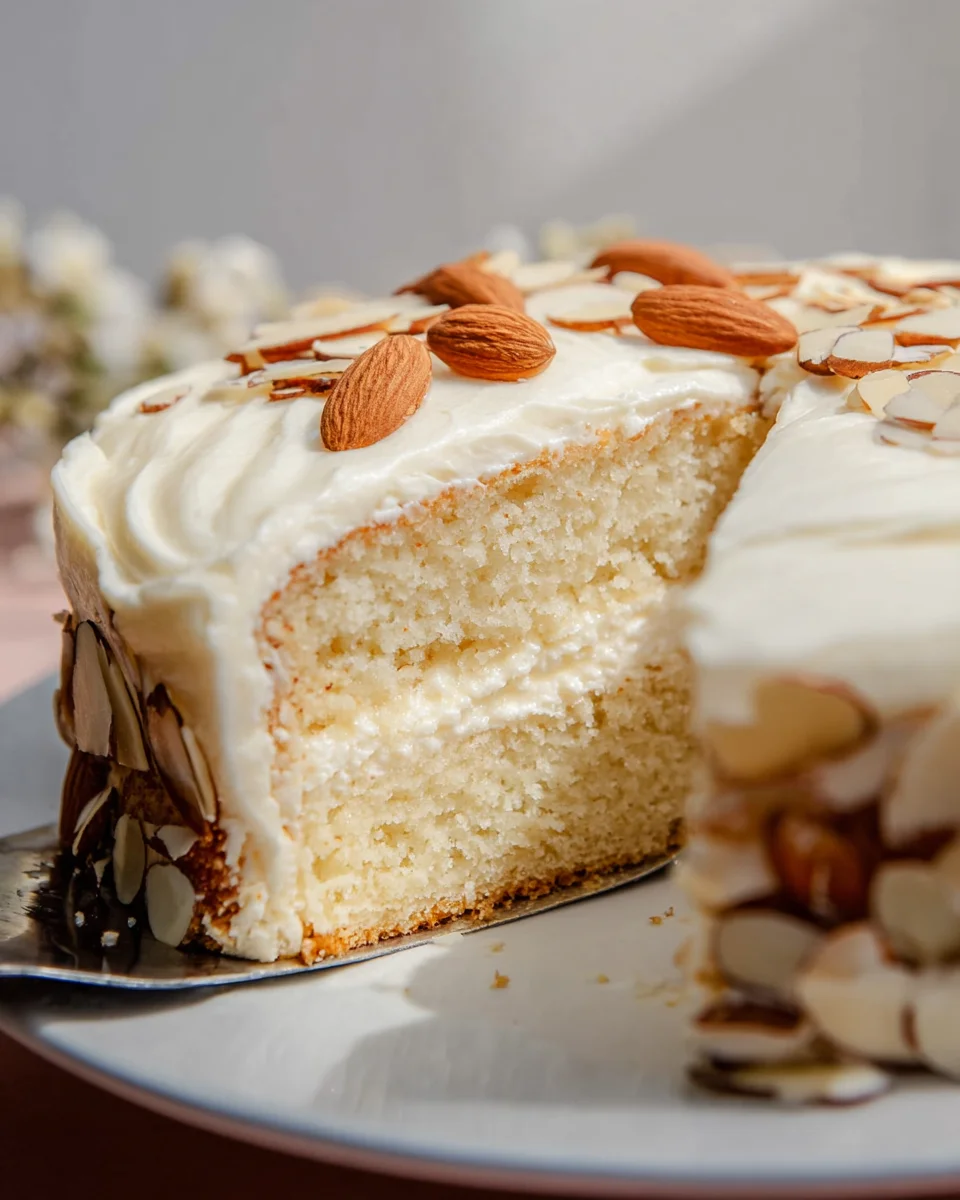
The Almond Cream Cake is truly a gem, bringing together a delightful almond flavor with a rich, creamy texture that is both comforting and indulgent. Each bite is a perfect balance of sweetness and nuttiness, making it a satisfying treat for any occasion.
This is the kind of recipe I come back to again and again, especially when I want to impress guests or simply enjoy a cozy afternoon with a cup of tea. There’s something magical about the way almond and cream come together, creating a cake that feels both elegant and homey.
I wholeheartedly encourage you to try your hand at making this delightful cake. Don’t hesitate to share your results or add your own twist—perhaps a hint of orange zest or a drizzle of chocolate! Your version could inspire others to enjoy this lovely creation as much as I do.
Delicious Almond Cream Cake
- Total Time: 57 minutes
- Yield: 15 servings 1x
Description
This Almond Cream Cake is a delightful celebration of family traditions, featuring a soft, buttery crumb layered with a luscious almond cream. With its golden exterior and creamy filling, it’s a showstopper for any gathering.
Ingredients
- 3/4 cup egg whites (plus 3 tablespoons, 6–7 large egg whites*)
- 1 cup salted butter (room temperature)
- 1 1/2 cups granulated sugar
- 3 cups cake flour* (spooned and measured carefully)
- 1/2 teaspoon salt
- 2 teaspoons baking powder
- 1 cup 2% milk
- 1 teaspoon almond extract
- 1/2 cup plus 2 tablespoons all-purpose flour
- 2 cups 2% milk
- 1 1/2 teaspoons almond extract
- 2 cups granulated sugar
- 2 cups salted butter (room temperature)
- Sliced almonds and whole almonds for decorating
Instructions
- Preheat your oven to 350ºF (175ºC). Grease and flour two 8" round cake pans to ensure your cakes come out easily.
- In a stand mixer, beat the egg whites at high speed until they form stiff peaks, which usually takes about 3-5 minutes. You’ll know they’re ready when you can turn the bowl upside down without them falling out. Be careful not to overbeat, as this can make them dry.
- Transfer the whipped egg whites to a separate bowl and refrigerate them while you prepare the batter. This keeps them cold and helps maintain their structure.
- In the same mixing bowl, cream the room-temperature salted butter for about 2 minutes until it appears white and fluffy. This is crucial for incorporating air into the batter, which helps the cake rise.
- Add the granulated sugar to the creamed butter and beat for an additional 1-2 minutes until it’s light and fluffy. This step is vital for achieving a light cake texture.
- In a separate bowl, whisk together the cake flour, salt, and baking powder. Set aside.
- In another bowl, combine the milk and almond extract. This mixture will help keep your cake moist and flavorful.
- Gradually add the dry ingredients to the butter-sugar mixture, alternating with the milk mixture. Start and end with the dry ingredients. Mix until just combined, being careful not to overmix; this could lead to a dense cake.
- Gently fold the chilled egg whites into the batter with a spatula. Make sure to fold them in carefully to maintain the airiness.
- Divide the batter equally between the prepared cake pans. Bake in the preheated oven for 25-27 minutes, or until the tops are golden and a toothpick inserted in the center comes out mostly clean with a few moist crumbs.
- Once baked, let the cakes cool in the pans for about 10 minutes. Carefully loosen the edges and transfer them to a wire rack to cool completely.
- While the cakes are cooling, prepare the frosting. In a saucepan over medium-low heat, whisk together the flour and milk until the mixture thickens, about 12-15 minutes. Stir constantly to prevent lumps.
- Remove the saucepan from heat and place it in an ice bath for 5-10 minutes to cool it down quickly. The mixture should reach room temperature before proceeding.
- Stir in the almond extract once the flour mixture has cooled.
- If you have a food processor, process the granulated sugar for about 1 minute until the granules are finer. This helps achieve a smoother frosting.
- In the stand mixer, cream the softened salted butter with the processed sugar for about 5 minutes until light and fluffy, ensuring there are no grainy textures left.
- Add the cooled flour mixture and beat until fully combined, resembling whipped cream in texture, which should take another 3-5 minutes. Scrape the sides of the bowl to ensure everything is well incorporated.
- Once the cakes are completely cool, place one layer on a cake plate. Spread a generous layer of frosting on top, then place the second cake on top. Use the remaining frosting to cover the top and sides. For a beautiful finish, garnish with sliced and whole almonds.
- Prep Time: 30 mins
- Cook Time: 27 mins
- Category: Dessert
- Method: Baking
- Cuisine: American
Nutrition
- Serving Size: 1 slice
- Calories: 350
- Sugar: 25 g
- Sodium: 200 mg
- Fat: 20 g
- Saturated Fat: 12 g
- Unsaturated Fat: 8 g
- Trans Fat: 0 g
- Carbohydrates: 40 g
- Fiber: 1 g
- Protein: 4 g
- Cholesterol: 80 mg
Keywords: Make sure your butter is at room temperature for creaming. If it's too cold, it won’t incorporate well into the sugar, leading to a dense cake. A common mistake is overmixing the batter after adding the egg whites. Gently fold them in to maintain the light texture; overmixing will lead to a denser cake.