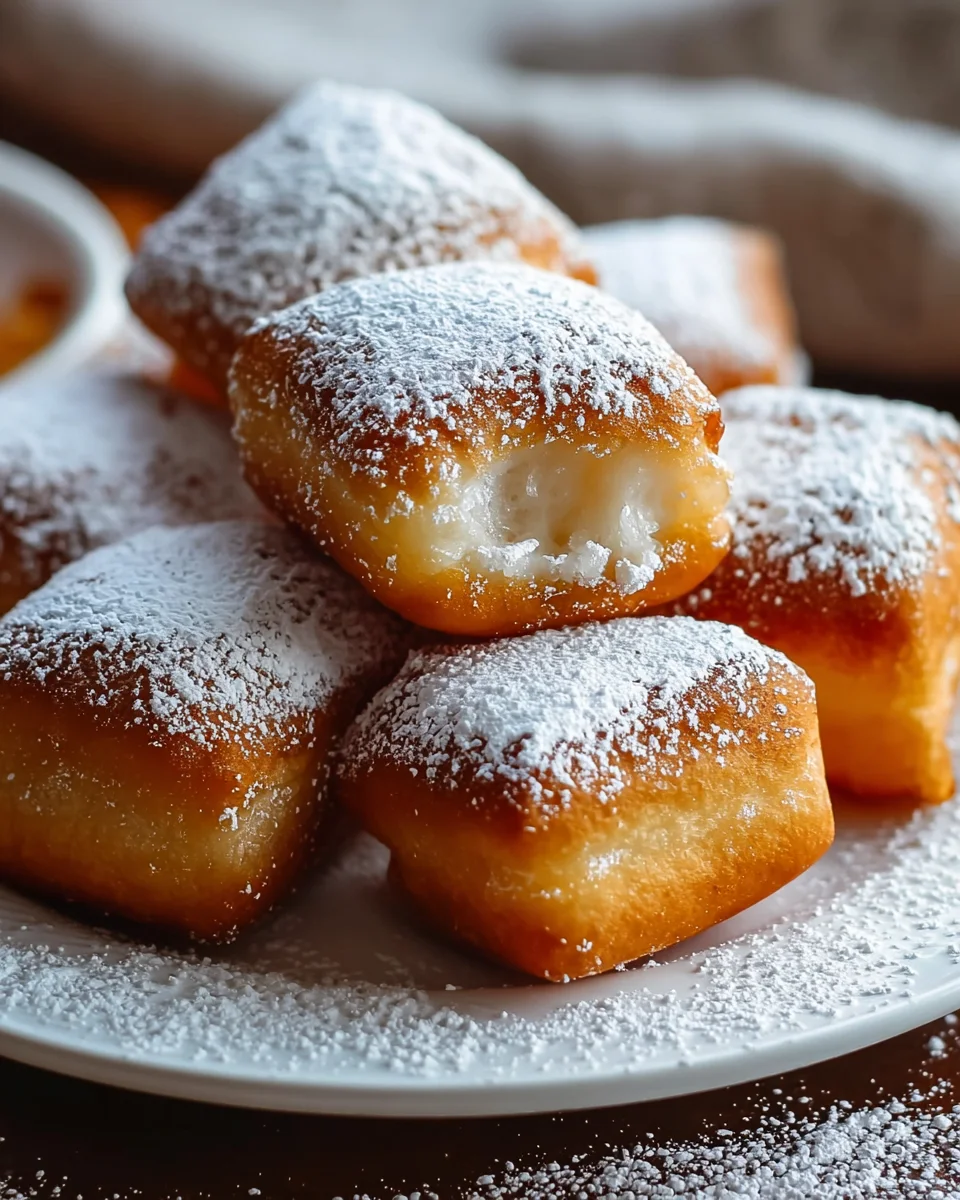
Vanilla French Beignets Recipe is more than just a dish; it’s an invitation to pure culinary bliss. Imagine biting into a warm, pillowy cloud, dusted with a generous blanket of powdered sugar, melting effortlessly in your mouth with a delicate whisper of vanilla. That’s the irresistible magic we’re about to create together.
These iconic fried dough pastries boast a rich history, tracing their origins back to France before finding their quintessential home in the vibrant heart of New Orleans. There, they became an inseparable part of Creole cuisine and a beloved, celebratory staple, especially during Mardi Gras. The mere aroma of freshly fried beignets can transport you to a bustling French Quarter cafe, evoking a sense of nostalgic comfort and joy.
People adore this treat for its unparalleled lightness, the subtle crunch of its golden exterior giving way to an incredibly soft, airy interior. My particular take, this Vanilla French Beignets Recipe, enhances that classic experience by infusing every bite with a delightful, aromatic vanilla essence that perfectly complements the rich, warm dough. This Vanilla French Beignets Recipe is designed to bring that authentic, café-quality indulgence right into your kitchen. Get ready to fill your home with an exquisite aroma and your table with an unforgettable taste experience.

Ingredients:
- For the Dough:
- 1 cup (240ml) whole milk, warmed to 105-115°F (40-46°C)
- 2 ¼ teaspoons (1 packet) active dry yeast
- ½ cup (100g) granulated sugar, plus 1 teaspoon for yeast activation
- ½ teaspoon salt
- 4 large eggs, at room temperature, lightly beaten
- ½ cup (113g) unsalted butter, melted and cooled slightly
- 1 tablespoon pure vanilla extract
- 4 ½ to 5 cups (540-600g) all-purpose flour, plus more for dusting your work surface
- For Frying:
- 6-8 cups (approx. 1.5-2 liters) vegetable oil, canola oil, or peanut oil, specifically for deep frying
- For Dusting:
- 1-2 cups (120-240g) powdered sugar (also known as confectioners’ sugar)
Preparing the Dough:
- Activate the Yeast: In a generously sized mixing bowl (or the bowl of your stand mixer if you’re using one, fitted with the dough hook attachment), combine the warm milk with 1 teaspoon of granulated sugar. The warmth of the milk is key here – it needs to be just right, not too hot to kill the yeast, and not too cold to inhibit its activity. Sprinkle the active dry yeast evenly over the surface of this warm milk and sugar mixture. Give it a gentle stir, just once or twice, to ensure all the yeast granules are moistened. Now, simply let it sit undisturbed for a peaceful 5-10 minutes. During this time, you’re looking for visible signs of life: the mixture should become delightfully foamy and bubbly on top, indicating that your yeast is indeed active, thriving, and ready to get to work. If you don’t see this characteristic foam, it means your yeast might be expired, or your milk’s temperature was off, and you’ll need to discard this batch and begin this step anew to ensure your beignets rise beautifully.
- Combine Wet Ingredients: To your now actively foamy yeast mixture, carefully add the remaining ½ cup of granulated sugar, the ½ teaspoon of salt, the lightly beaten room-temperature eggs, the unsalted butter which you’ve melted and allowed to cool slightly (we don’t want to cook the eggs or shock the yeast with hot butter!), and the fragrant 1 tablespoon of pure vanilla extract. Whisk these ingredients together thoroughly until they are all well combined and homogenous. At this stage, the mixture will have a wonderfully inviting, subtly sweet aroma, giving you a sneak peek into the delicious vanilla French beignets you’re about to create.
- Incorporate Flour: Now it’s time to bring in the main structural component: the flour! Gradually add the all-purpose flour to your wet mixture, one cup at a time. After each addition, make sure to mix thoroughly until the flour is mostly incorporated before adding the next cup. If you’re utilizing a stand mixer, begin on a low speed to prevent a flour cloud from forming, then once the flour is mixed in, you can increase to a medium-low speed. If you’re mixing by hand, grab a sturdy wooden spoon or a robust spatula; this dough will get quite thick! Start with 4 ½ cups of flour and only add the remaining ½ cup if the dough still appears excessively sticky and wet. Your ultimate goal is to achieve a dough that is soft and slightly sticky to the touch. It should largely pull away from the sides of your mixing bowl, but it’s perfectly normal for it to cling just a little bit to the very bottom, indicating it has enough moisture for a tender result.
-
Knead the Dough: This step is vital for developing the gluten, which gives beignets their signature chewiness and airy structure.
- Using a Stand Mixer: Once you’ve incorporated most of the flour, increase your mixer’s speed to medium-low. Allow the dough hook to knead the dough for a dedicated 7-10 minutes. Over this period, you’ll observe a remarkable transformation: the dough will evolve from a shaggy mass into a smooth, elastic, and noticeably less sticky ball. When properly kneaded, it should feel wonderfully pliable and bouncy, stretching without tearing easily.
- Kneading by Hand: If you’re going old-school and kneading by hand, turn the dough out onto a lightly floured clean work surface. Knead the dough vigorously for 10-15 minutes. The technique involves pushing the dough away from you with the heel of your hand, then folding it back over itself, and rotating it slightly. Continue this rhythmic motion until the dough takes on that desirable smooth, elastic texture and springs back when you gently poke it with your finger. While it’s certainly a bit of a workout for your arms, the satisfaction of feeling the dough develop under your hands is an incredibly rewarding part of the baking process.
- First Proofing (Rising): Lightly grease a large, clean mixing bowl with a tiny bit of neutral vegetable oil or a quick spray of cooking spray. Transfer your beautifully kneaded dough into this bowl, and then give the dough one turn to ensure its entire surface is coated with a thin film of oil. This simple step is crucial as it prevents a dry, crusty skin from forming on your dough as it rises. Now, cover the bowl securely with plastic wrap or a clean, damp kitchen towel. Place the covered bowl in a warm, draft-free environment. Excellent spots often include a slightly warm oven (you can preheat it to its lowest setting for just a minute or two, then turn it off completely before placing the dough in), or simply on top of your refrigerator, where it’s usually a bit warmer. Allow the dough to rise for a generous 1 ½ to 2 hours, or until you can clearly see that it has gloriously doubled in size. This initial, primary rise is absolutely critical for both developing the rich flavor and achieving the wonderful light texture of your vanilla French beignets.
Shaping and Second Proofing:
- Punch Down the Dough: After the dough has completed its impressive first rise and doubled in size, gently but firmly punch it down. This action releases the accumulated gases, helping to relax the gluten structure and redistribute the yeast cells, which ultimately leads to a finer, more even crumb texture in your finished beignets.
- Roll Out the Dough: Lightly flour a clean and spacious work surface. Turn the dough out onto this floured area. Using a rolling pin, gently and evenly roll the dough into a large rectangular shape. Aim for a consistent thickness of approximately ½ inch (1.25 cm) across the entire surface of the rectangle. Maintaining an even thickness is key to ensuring that all your beignets cook uniformly when they hit the hot oil. Try to resist the urge to over-flour your surface, as excessive flour can be absorbed by the dough, potentially leading to tougher beignets.
- Cut the Beignets: Now for the fun part! Using a sharp knife, a pizza cutter, or a pastry wheel, carefully cut the rolled-out dough into individual 2-inch (5 cm) squares. While this is the traditional size, you can certainly opt for slightly larger or smaller squares based on your personal preference. However, remember that consistency in size is truly important for achieving even frying results. If you prefer a round shape, a cookie cutter can be used, though the classic French beignet is almost always square. Don’t waste those precious scraps! Gently gather any leftover dough, lightly press them together, and re-roll them once more to cut additional beignets, minimizing any waste.
- Second Proofing: Line one or two large baking sheets with a sheet of parchment paper. Carefully transfer the freshly cut dough squares to your prepared baking sheets, making sure to leave about an inch of space between each beignet to allow for their inevitable expansion during this final rise. Loosely cover the baking sheets with plastic wrap or a clean, light kitchen towel. Place them once again in a warm, draft-free spot for their second and final proofing. Let them rise for another 30-45 minutes, or until they look noticeably puffy, lighter, and feel quite airy. This crucial final rise is what gives the beignets that magnificent, cloud-like, delicate texture once they are fried.
Frying the Beignets:
- Prepare for Frying: While your beignets are enjoying their second proof, it’s the perfect time to set up your frying station for a smooth and safe process. In a large, heavy-bottomed pot or a sturdy Dutch oven, pour enough vegetable oil, canola oil, or peanut oil to reach a depth of 3-4 inches (7.5-10 cm). Securely attach a deep-fry thermometer to the side of the pot, ensuring that the tip is fully submerged in the oil but not touching the bottom of the pot. You’ll also want to have a slotted spoon or a spider utensil readily available for turning and removing the beignets. Finally, prepare a landing zone: line a large baking sheet with several layers of paper towels, or set up a wire rack over a baking sheet, to allow the fried beignets to drain thoroughly.
- Heat the Oil: Place your pot with the oil over a medium-high heat. Slowly and carefully heat the oil to a precise and consistent temperature of 350°F (175°C). Maintaining the correct oil temperature is absolutely paramount for crafting perfect, non-greasy beignets. If your oil is too cool, the beignets will greedily absorb too much oil, resulting in a heavy and greasy texture. Conversely, if the oil is too hot, they will brown excessively quickly on the outside, creating a crisp shell while remaining disappointingly raw and doughy in the center. Continuously monitor your thermometer and adjust the heat as needed to keep that temperature stable and spot-on.
- Fry the Beignets in Batches: Once your oil has reached the ideal 350°F (175°C), carefully and gently drop 3-4 beignets into the hot oil. It’s incredibly important not to overcrowd the pot, as doing so will cause the oil temperature to drop significantly, leading to uneven cooking and greasy beignets. The moment they hit the oil, your beignets should almost immediately begin to puff up dramatically and float to the surface, a truly magical sight!
- Cook and Turn: Allow the beignets to fry for approximately 1-2 minutes per side, or until they achieve a gorgeous, even golden brown color. Use your slotted spoon or spider to gently flip them over, ensuring they cook evenly on both sides. As they fry, you’ll marvel at how they continue to puff up, creating that characteristic hollow center and wonderfully light, airy texture. The delightful aroma filling your kitchen will be an unmistakable sign that something truly delicious is underway!
- Drain Excess Oil: Once your beignets are beautifully golden brown on both sides, carefully remove them from the hot oil using your slotted spoon. Pause for a moment, allowing any excess oil to drip back into the pot. Then, transfer the freshly fried beignets to your prepared paper towel-lined baking sheet or wire rack to drain further. This step is essential for absorbing any remaining surface oil, ensuring your beignets are light and not overly greasy. Continue this process with the remaining beignets, always remembering to keep a close eye on your oil temperature and adjusting the heat as necessary between batches to maintain that perfect 350°F.
Finishing and Serving:
- Dust with Powdered Sugar: As soon as the beignets have drained for a minute or two and are still wonderfully warm (but not so piping hot that the sugar melts instantly), it’s time for their iconic finish! Generously dust them with powdered sugar. There are a couple of excellent ways to do this: you can place a few beignets at a time into a large bowl with the powdered sugar and gently toss them until evenly coated. Alternatively, you can arrange them on a wire rack and use a fine-mesh sieve to sprinkle the sugar lavishly over the tops. The residual warmth of the beignets is key here, as it helps the powdered sugar to adhere beautifully, creating that unmistakable, sweet, and powdery coating that is synonymous with vanilla French beignets.
- Serve Immediately: For the ultimate experience, beignets are undeniably best enjoyed warm and absolutely fresh from the fryer. That delicate crispness on the outside, the ethereal soft and airy interior, perfectly complemented by the generous dusting of powdered sugar, creates a truly incomparable delight that, sadly, diminishes with time. So, gather your loved ones without delay and share these delectable treats right away! They make a perfect accompaniment to a robust cup of coffee, a creamy cafe au lait, or simply a refreshing glass of cold milk.
- Storage (Optional): If by some miracle you happen to have any leftovers – which, let’s be honest, is a rare occurrence when beignets are involved! – they can be stored in an airtight container at room temperature for up to one day. However, do be aware that they will inevitably lose their fresh crispness and become softer. A quick warm-up in a toaster oven or even a brief spell in a conventional oven can somewhat revive them, but it’s important to remember that truly nothing quite compares to the magic of a beignet served fresh and warm.
Conclusion:
And so, we arrive at the sweet conclusion of our culinary adventure! If there’s one treat I could wholeheartedly recommend you whisk up in your own kitchen this weekend, it would undoubtedly be these divine beignets. I promise you, the effort is incredibly rewarding, and the memories you’ll create with loved ones over a platter of these warm, sugar-dusted beauties are simply priceless. What makes this particular offering a true must-try isn’t just its elegant simplicity, but the sheer joy it brings from the very first bite. Imagine the delicate crunch as you break through the golden-brown exterior, giving way to an incredibly soft, airy interior that practically melts in your mouth. The subtle, yet profoundly comforting, aroma of vanilla fills the air as they fry, a scent that promises warmth, comfort, and a touch of indulgence. There’s something truly magical about a freshly fried beignet, straight from the pan, still warm and pillowy soft, with just the right dusting of confectioners’ sugar. It’s an experience that transcends a simple dessert; it’s a moment of pure, unadulterated bliss that transports you straight to a quaint Parisian café, even if you’re just in your own kitchen.
Elevate Your Beignet Experience: Serving & Variation Suggestions
While a generous dusting of powdered sugar is the quintessential way to enjoy these exquisite pastries, don’t be afraid to get creative with your serving! For a classic pairing, serve your beignets alongside a strong cup of coffee, a frothy latte, or a chicory-infused café au lait. The slight bitterness of the coffee beautifully complements the sweetness of the pastry. If you’re feeling a little more adventurous, consider a side of fresh berries – raspberries, blueberries, or sliced strawberries add a vibrant burst of color and a lovely tart counterpoint. A warm fruit compote, perhaps apple cinnamon or mixed berry, can also be a delightful accompaniment, offering a saucy texture that soaks beautifully into the tender dough. For those with an insatiable sweet tooth, a rich chocolate dipping sauce or a decadent caramel drizzle can turn your beignets into an even more luxurious dessert. And why stop there? While the Vanilla French Beignets Recipe shines brightly on its own, you can subtly vary the flavor profile. Try adding a hint of orange or lemon zest to the dough for a bright, citrusy lift, or a pinch of cinnamon or nutmeg for a cozy, autumnal twist. You could even experiment with a light cream cheese filling or a fruit jam injected after frying, though purists will argue the simple, airy void is part of their charm. Whichever way you choose to serve them, these beignets are guaranteed to impress and delight.
Your Culinary Adventure Awaits!
Now that you have all the tips and encouragement you need, I genuinely hope this has inspired you to roll up your sleeves and try this truly rewarding recipe. There’s a unique satisfaction that comes from creating something so delicious from scratch, and I promise you, the aroma alone is worth the journey. Don’t be intimidated; this recipe is designed to be approachable, and the steps are straightforward. Imagine the smiles you’ll bring to the faces of your family and friends when you present them with a plate piled high with these delectable treats. Life is about savoring the sweet moments, and making these beignets is definitely one of them. So, go on, embrace your inner baker, and bring a touch of French café magic into your home. I would absolutely love to hear about your experience! Please share your triumphs, your tips, and your serving ideas with me. Happy baking, and happy eating!
Vanilla French Beignets Recipe – Sweet, Fluffy, Melt-in-Mouth
Imagine biting into a warm, pillowy cloud, dusted with powdered sugar, melting effortlessly in your mouth with a delicate whisper of vanilla. These iconic fried dough pastries boast a rich history from France to New Orleans, adored for their unparalleled lightness and soft, airy interior. This recipe enhances that classic experience with aromatic vanilla essence.
Ingredients
Instructions
Important Information
Nutrition Facts (Per Serving)
It is important to consider this information as approximate and not to use it as definitive health advice.
Allergy Information
Please check ingredients for potential allergens and consult a health professional if in doubt.